Comparing amounts is one of the first big ideas in kindergarten math. Kids start by looking at two groups and saying which has more, then learn that 8 is more than 5 even with no pictures at all. These more or less worksheets walk through that in four steps, and each one prints with your child's name on it. The name is added in your browser and never leaves your device.
Four kinds of more or less pages
- Compare groups: two boxes of pictures on each row. Circle the box with more, or switch the page to fewer. Pictures sit in rows of five so they are easier to count.
- Compare numbers: ten pairs of numbers. Circle the bigger one, or the smaller one. For 1 to 5 and 1 to 10, a few dots under each number let kids check by counting.
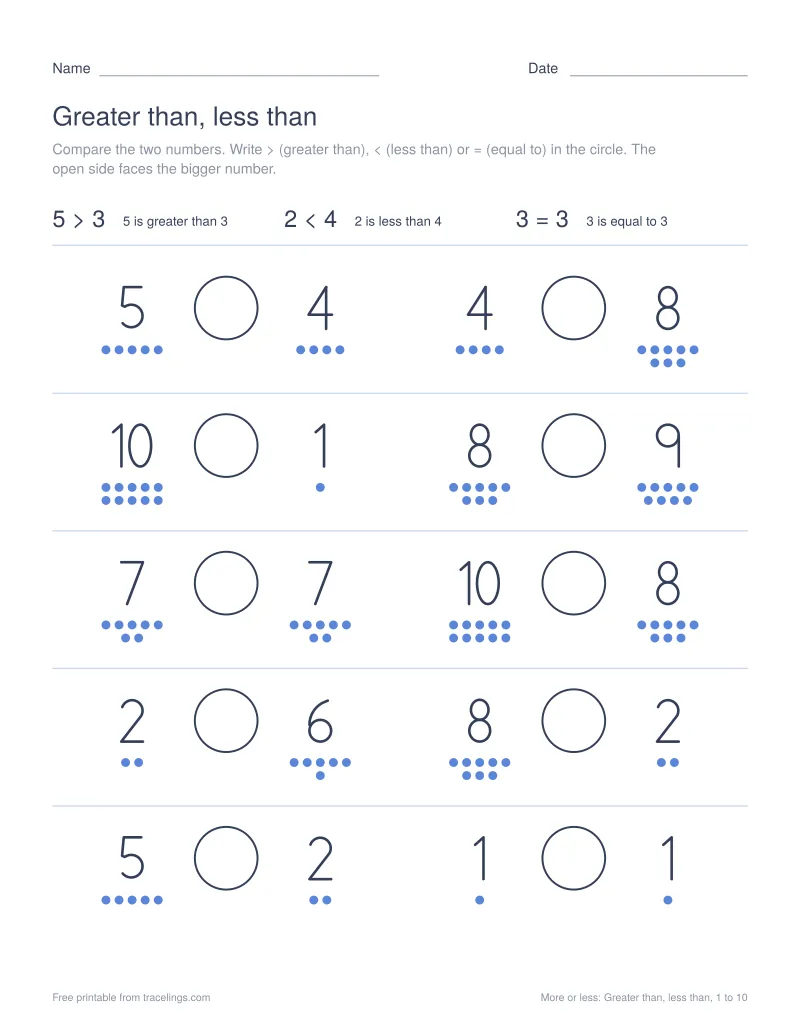
- Greater than, less than: write >, < or = in the circle between two numbers. A small key at the top shows all three signs, and every page has a couple of equal pairs so = gets used too.
- One more, one less: a number in the middle, with a box on each side for the number before and the number after.
Start with pictures, then numbers
Begin with the compare groups page for 1 to 5. Ask your child to count each box out loud before circling. Once that is easy, try compare groups for 1 to 10, then the compare numbers page with dots. The dots are a bridge: kids can count to check, and over a few weeks most stop needing them. Save numbers 11 to 20 for when your child can read the teen numbers without help.
If a group is hard to count, put a cracker or a button on each picture as you count, then line up the two groups side by side. The longer line has more. That matching step is how many kids first see the difference.
Greater than and less than worksheets for kindergarten
The > and < signs are new symbols to learn, so keep the first page short. Do two or three problems together, reading each one as a sentence: "nine is greater than three." The open side of the sign faces the bigger number. Some kids like the hungry mouth picture, where the mouth opens toward the bigger number because it wants more to eat.
Many kindergarten programs introduce the symbols near the end of the year, and some wait until first grade. If your child isn't ready, use the compare numbers page instead. It practices the same thinking with no symbols. Kids develop at different speeds. If you have concerns, ask your child's teacher or pediatrician.
One more, one less
Knowing the number just before and just after is a quiet skill that helps with counting on, counting back and early addition. If the page feels tricky, lay out a strip of paper with 1 to 20 written on it and let your child find the middle number first. For writing practice on the same numbers, a number tracing 1 to 20 sheet pairs well with it.
More kindergarten math
These pages are part of our free kindergarten math worksheets. Once comparing feels easy, move on to kindergarten addition worksheets with pictures and a number line. For counting and number sense, the ten frame printables show 5 and 10 at a glance, which makes comparing faster too.
A 10-minute more or less routine
- 3 minutes: make two piles of small snacks. Ask which pile has more, then count both to check. Let your child eat the extras to make the piles equal.
- 5 minutes: one worksheet side by side. Do the first row together out loud, then let your child try the next two on their own.
- 2 minutes: a quick game. Say two numbers and have your child hold up the bigger one on their fingers.