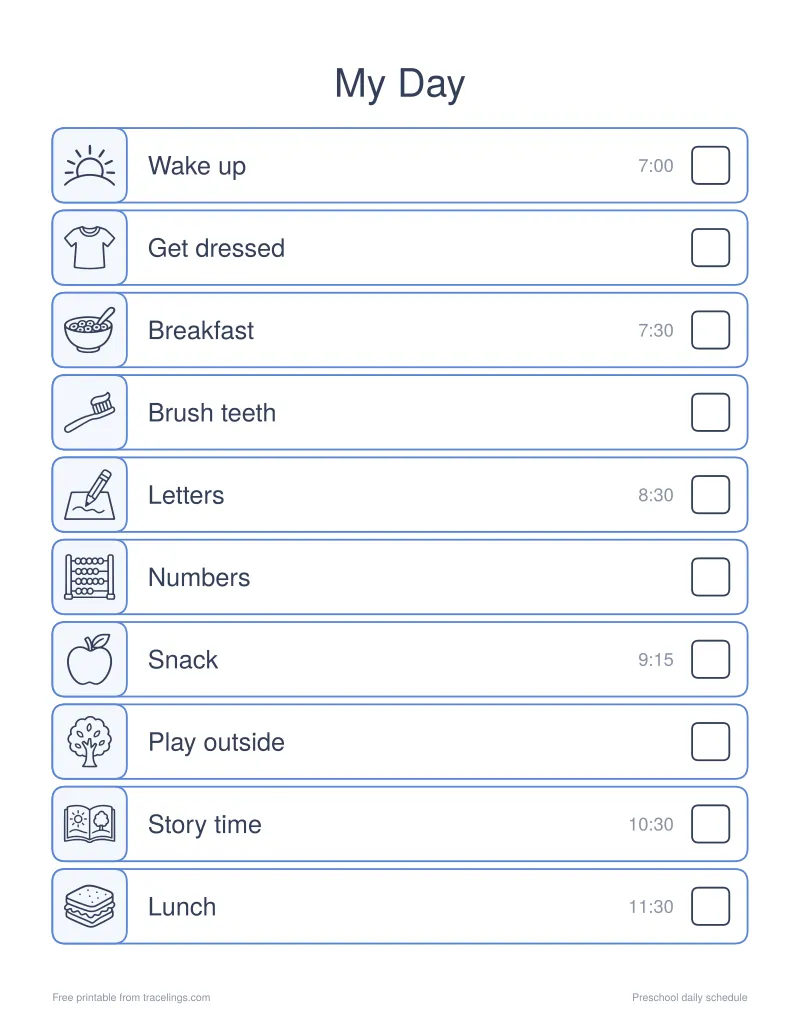
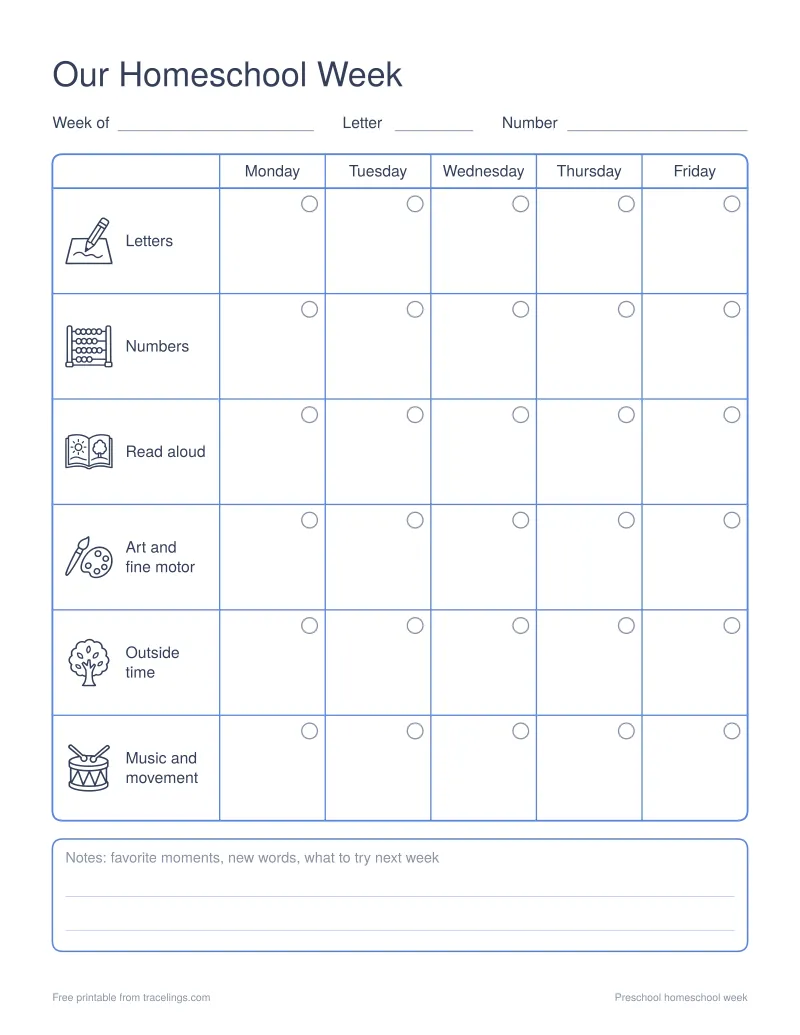
Preschoolers do better when they know what comes next. A picture schedule shows the day in order, so your child can check it themselves instead of asking "What are we doing now?" all morning. It also gives you something calm to point to when it's time to stop playing and come to the table.
Three preschool schedule printables
- Picture schedule for the day: up to 12 steps in order, each with a picture, your words, an optional time and a box to check off. Hang it at your child's eye level.
- Cut-apart picture cards: 12 cards with dashed cut lines. Stick them on a strip in order and take each one down when it's done. Empty cards print blank, so your child can draw their own.
- Weekly homeschool chart: Monday to Friday, with a row for each kind of learning (letters, numbers, read aloud, art, outside time and more). Write what you did in each box, or just check the circle.
There are 45 pictures to choose from, from wake up, shoes and backpack to letters, numbers, story time, quiet time, the potty steps, bath and bedtime. Change any label to the words your family uses: "Circle time", "Grandma's house" or "Swim lesson" all work.
For the start of the day, pick the "School morning routine" sample, or open the morning routine chart for preschoolers page for wake up to backpack, with a school morning, a home morning and tips for getting out the door.
For the end of the day, pick the "Bedtime routine" sample, or open the printable bedtime routine chart page for pajamas, potty, teeth, story, hugs and lights out, with tips for toddlers and preschoolers.
Potty training? Open the potty training chart page for a printable sticker chart with stars or dinosaur, unicorn or truck pictures and a reward line, and the potty steps in pictures, from pants down to wash hands.
A sample preschool daily schedule at home
The "Homeschool morning" sample in the maker is a good place to start. It keeps the learning part short and puts it early, when many kids are at their freshest:
- 7:00 to 8:30: wake up, get dressed, breakfast, brush teeth.
- 8:30 to 9:00: letters and numbers, about 10 to 15 minutes at the table with a break if needed.
- 9:15: snack, then outside play for as long as you can.
- 10:30: story time, then free play until lunch.
Times are only a guide. Shift the whole thing to fit your family, and leave the times off the page if your child can't read a clock yet. The order is what matters to them. For a fuller walk through the day and the week, with what to do on hard days, read our preschool homeschool schedule guide.
How to use a visual schedule with a preschooler
- Make it together. Let your child help put the cards in order or color the pictures. Kids tend to follow a plan they helped make.
- Hang it low. Put it where your child can see and touch it, like the fridge or the back of a door.
- Check it often. At each change, walk over and look together: "Snack is done. What's next?" Let your child tick the box or take down the card.
- Keep it steady. Use the same order most days for a week or two before changing it. If something new is coming, add a card for it the night before.
Some kids lean on a picture schedule more than others, and that's normal. If transitions are very hard for your child, or you have other concerns, ask your child's teacher or pediatrician.
Filling the learning time
Short and regular works well at this age. For the letters slot, print one of our letter tracing worksheets or a name tracing worksheet with your child's name. For numbers, the pre-K math worksheets make counting, ten frame and find the number pages for 1 to 20.
If you'd rather not plan each week yourself, our homeschool preschool curriculum lays out 36 weeks with a letter and a number each week, about 15 minutes a day. The weekly chart above has a Letter and a Number line for exactly that. Week 1 is free: take the free placement check to start at the right week.
Try this tomorrow morning
- Tonight, 5 minutes: print the picture schedule with the "Homeschool morning" sample and your child's name, and tape it to the fridge.
- At breakfast: read it together from the top, pointing at each picture.
- At each change: go back to the schedule and let your child check the box.
- At bedtime: ask what their favorite part was, and change one step for the next day if something didn't work.