A potty training chart gives your child something to see and do each time they try: a sticker in a box, right away, with you cheering. Over a few days the row fills up, and your child can see the tries adding up toward the reward at the bottom. The steps chart helps with the other half, remembering what comes after "sit on the potty."
Three potty printables
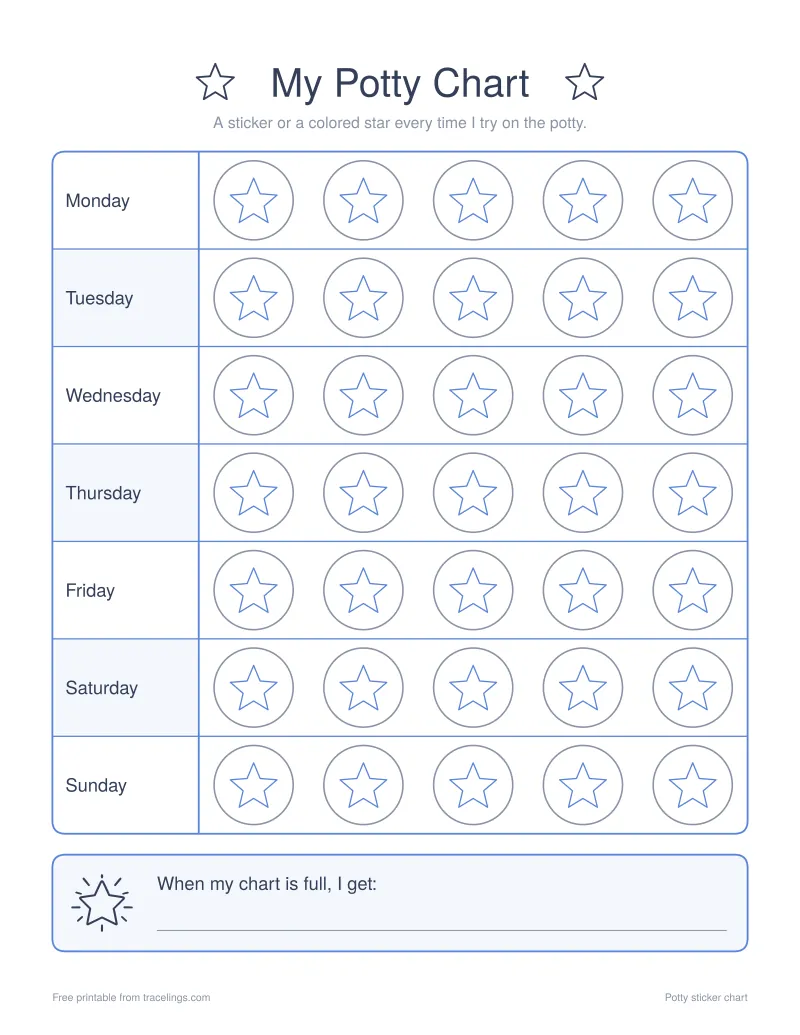
- Potty sticker chart: Monday to Sunday, with 3, 4, 5, 6 or 8 circles a day. Each circle fits a sticker, or your child can color the star or picture inside if you don't have stickers. A box at the bottom says "When my chart is full, I get:" with your reward printed on the line, or left blank to write in.
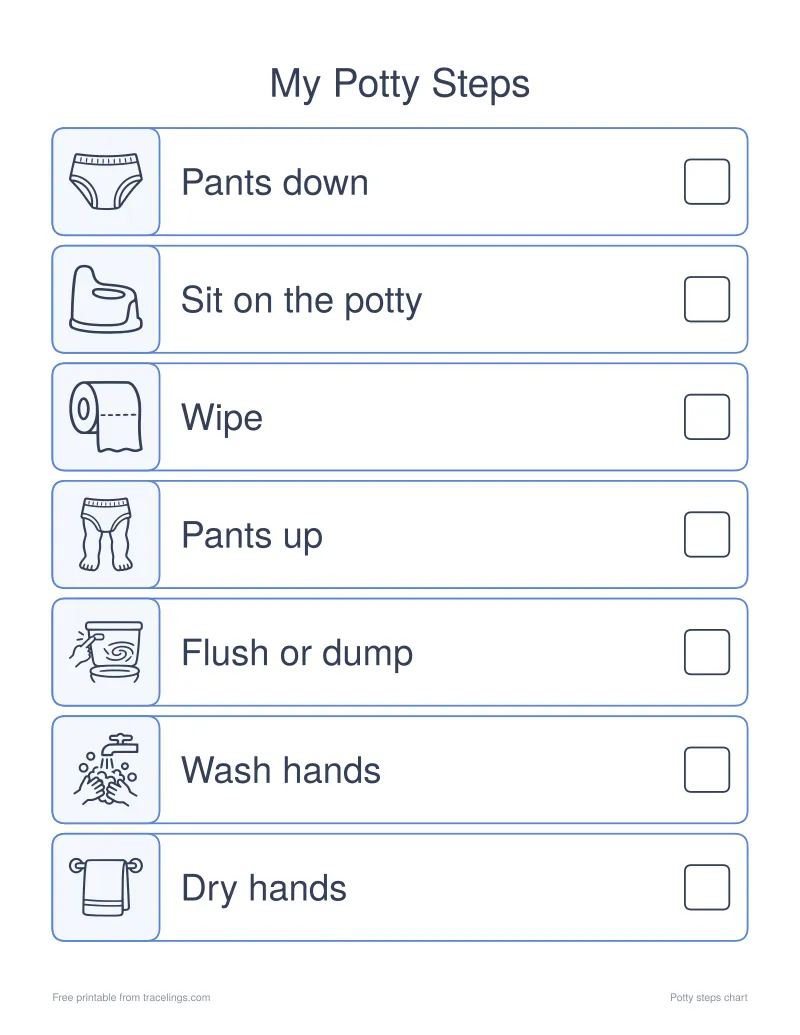
- Potty steps chart: each step in order, with a picture and a box to check off. There are samples for a potty chair, the big toilet with a step stool, and a short three-step version for the very first days.
- Potty picture cards: 12 cards with dashed cut lines, to tape in a row on the wall by the potty. Empty cards print blank to draw on.
The potty pictures are pants down, sit on the potty, sit on the toilet, step stool, wipe, flush, pants up, wash hands, soap and dry hands. All the pictures from our preschool daily schedule maker are there too, and you can change any label to your family's words, like "Pee-pee time" or "Dump the potty."
Dinosaur, unicorn and truck potty charts
A potty training sticker chart works better when your child wants to look at it. Under "Pictures in the circles" you can swap the stars for one of 12 picture themes: Dinosaurs, Unicorns, Trucks and cars, Ocean animals, Space, Farm animals, Bugs, Princesses and castles, Trains, Sports, Pets or Jungle animals.
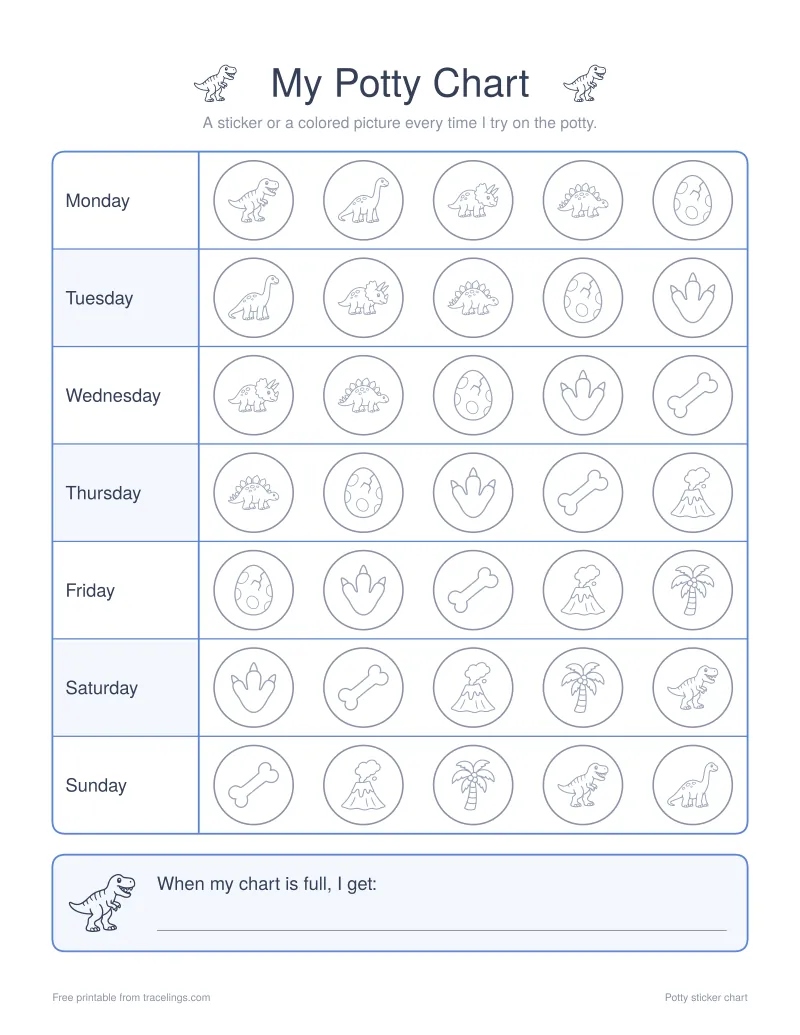
- Every circle gets a light picture, like a T-rex, an egg, a bone or a volcano for dinosaurs. A sticker covers it, or your child colors it in after each try.
- The pictures change from circle to circle, so a full row looks like a collection. Some kids like to say the name of each picture as they cover it.
- The theme's main picture sits beside the title and next to the reward, so the chart looks like it belongs to your child.
Let your child pick the theme. Choosing is part of the fun, and a chart they picked is one they want to fill. The pictures are our own drawings, not cartoon characters, and they are the same ones used in the interest themes of our personalized homeschool program, where the free week 1 on the Pre-K track can include the chart in their child's own theme with one tick, and members can print a new one any week. With six or eight circles a day, the chart uses the simpler pictures from each theme so they still read clearly when small.
The potty steps in order
The "Potty chair steps" sample in the maker has seven steps. Saying them the same way every time helps a toddler remember the order:
- Pants down: pants and underwear (or the pull-up) down to the knees. Elastic waists make this much easier.
- Sit on the potty: feet flat on the floor, for a few minutes. A book or a song helps them stay put.
- Wipe: a grown-up usually helps with wiping for a long while. Girls wipe front to back.
- Pants up: let your child pull up as much as they can by themselves.
- Flush or dump: with a potty chair, a grown-up empties it into the toilet and your child gets to flush.
- Wash hands, then dry hands: soap, a song, rinse and towel. A step stool at the sink makes this a job they can do.
For the big toilet, the "Big toilet steps" sample adds the step stool at the start. A small seat that sits on top of the toilet seat, and a stool under the feet, help many kids feel steady.
How to use the sticker chart
- Hang it in the bathroom at your child's eye level, with the stickers in a cup nearby.
- A sticker for every try. In the first days, sitting on the potty earns a sticker even if nothing happens. That is the skill you are building.
- Give it right away. A sticker an hour later doesn't connect to the try. Let your child put it on the chart.
- Name the reward before you start, and keep it small: a park trip, a library book, choosing dinner. Point to the reward box when the row is filling up.
- Accidents get no sticker and no scolding. Say "pee goes in the potty," clean up together, and move on. A blank circle is fine.
- Print a new chart each week. When your child is going most times, switch to a sticker for going, or for a dry morning.
Signs your child may be ready
Many kids show signs of being ready somewhere between about 18 months and 3 years, and some a little later. Common signs include staying dry for a couple of hours, telling you when the diaper is wet or dirty, hiding to poop, wanting to watch you use the toilet, and being able to pull pants up and down with a little help.
Starting when your child shows a few of these signs usually goes more smoothly than starting by a set age. Kids vary a lot here, and staying dry at night often comes months after daytime. If you have concerns, ask your child's pediatrician.
Potty training a preschooler
If your child is 3 or older, the chart can do more of the work. Older kids often like counting the stickers, choosing the reward and checking off the steps by themselves. Pick the six or eight boxes a day if they go often.
Many families start potty training alongside other new routines. Our morning routine chart and bedtime routine chart already include a potty step, so the potty becomes part of waking up and going to bed. If you're homeschooling a preschooler, the homeschool preschool curriculum keeps table time to about 15 minutes, with potty breaks before and after. Week 1 is free: take the free placement check.
Try this on day one
- The night before, 5 minutes: print the sticker chart with five boxes a day and your child's name, and the potty steps chart with the "Potty chair steps" sample.
- In the morning: read the steps chart together, pointing at each picture, and let your child tape both charts up in the bathroom.
- Through the day: offer the potty right after waking, after meals, before a nap and before bed. Each try gets a sticker.
- At bedtime: count the stickers together and say how many more until the reward.