Bedtime goes smoother when a child knows exactly what comes next. A bedtime routine chart puts the steps in pictures, so a 3 or 4 year old can see that pajamas come before teeth and that one story comes before lights out. The chart becomes the one giving directions, and you get to be the one cheering.
Two bedtime printables
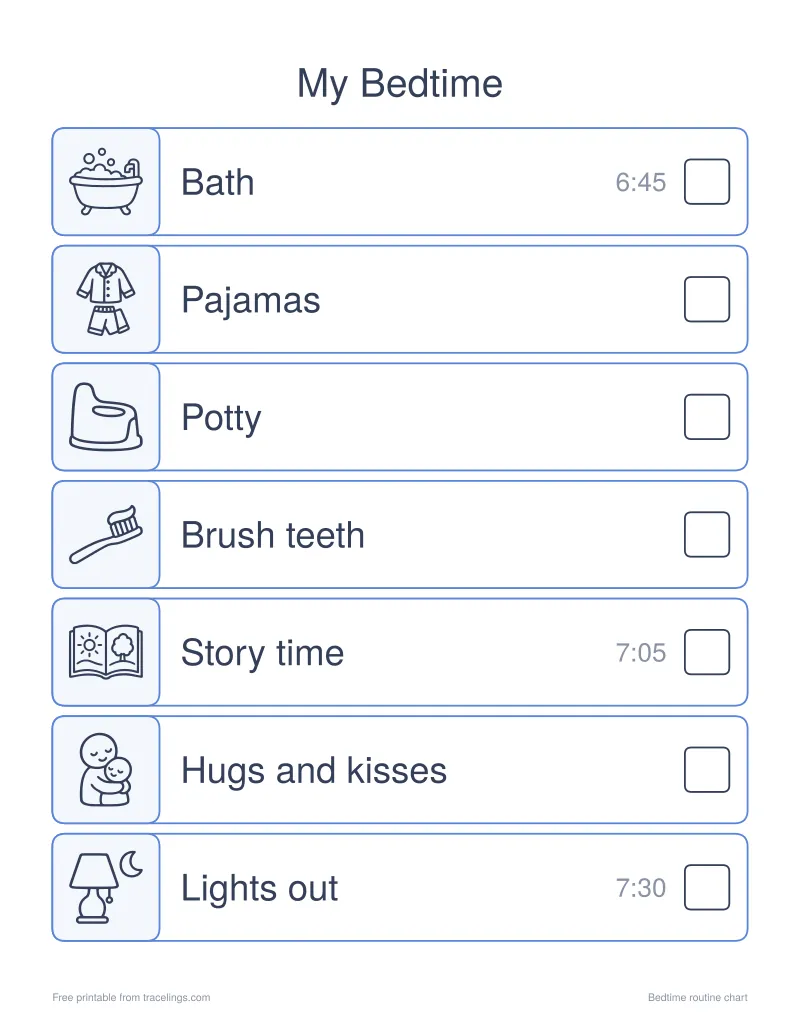
- Bedtime routine chart: up to 12 steps in order, each with a picture, your words, an optional time and a box to check off. Slip it in a sheet protector and use a dry-erase marker to check the boxes again each night.
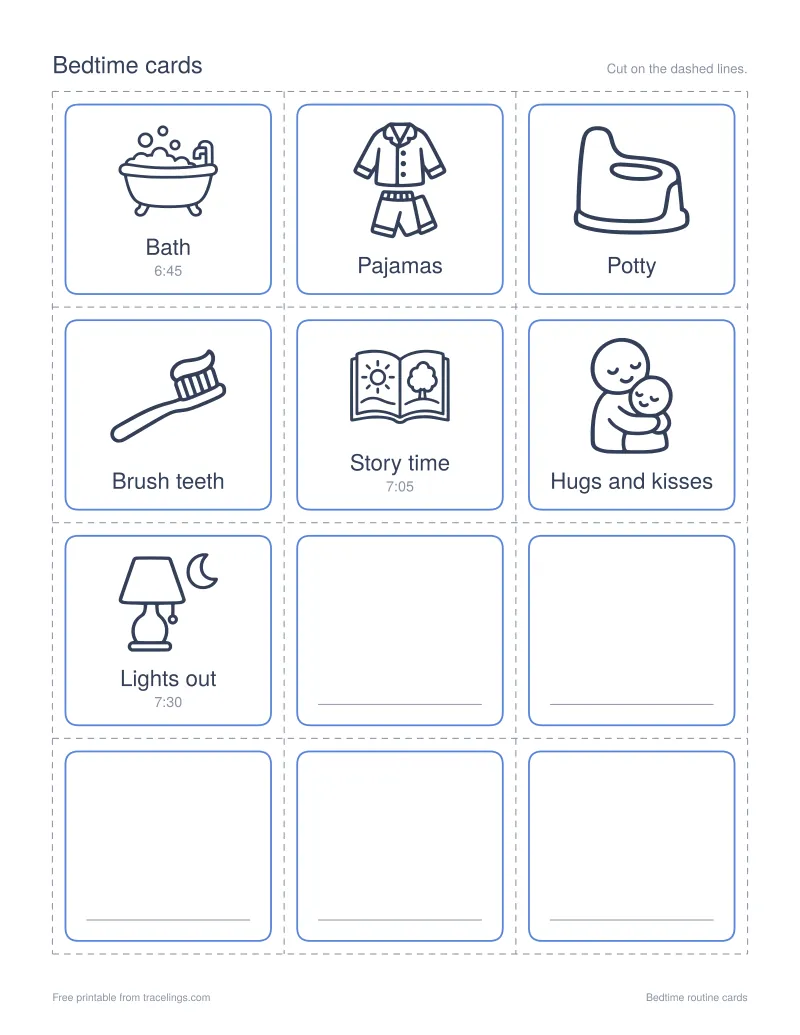
- Bedtime picture cards: 12 cards with dashed cut lines. Stick them in a row on the bedroom door and let your child turn each one over or move it to a "done" pocket. Empty cards print blank to draw on.
There are bedtime pictures for bath, pajamas, potty, wash hands, wash face, brush teeth, a drink of water, clothes for tomorrow, story time, hugs and kisses, the night light and lights out, plus all the daytime pictures from our preschool daily schedule maker. Change any label to your family's words, like "Bath (Mon, Wed, Fri)" or "Two songs".
A simple bedtime routine for a preschooler
The "Bedtime routine" sample in the maker is a calm 20 to 30 minute routine, a little longer on bath nights. It runs from the busiest step to the quietest:
- 6:45, bath: warm water and a few minutes of play. On non-bath nights, wash hands and face instead.
- Pajamas and potty: let your child choose between two pairs of pajamas. A small choice helps them feel in charge.
- Brush teeth: a grown-up usually helps at this age. Many families brush for about two minutes with a song.
- 7:05, story time: one or two books in bed, chosen before you start, so "one more" has an easy answer.
- Hugs and kisses, then 7:30, lights out: the same short goodnight words every night, then leave the room.
Times are only a guide, so shift the whole thing to fit your evening. Most preschoolers can't read a clock yet, and the order is what they follow. On nights without a bath, or when the evening runs late, try the "Short bedtime (no bath)" sample instead.
Bedtime routine chart for toddlers
Younger kids do best with fewer, bigger pictures. For a 2 year old, try three to five steps (pajamas, teeth, story, lights out) and the picture cards rather than the list. Hold up each card as you start that step, and say its name. Toddlers often like handing you the card when the step is done, which turns the routine into a small game instead of a string of instructions.
Older preschoolers and kindergartners can usually handle the full chart and check off the boxes themselves. Some like adding a step of their own, like setting out clothes for tomorrow.
How to make the chart stick
- Make it together. Let your child help pick the steps, put the cards in order or color the pictures. Kids tend to follow a plan they helped make.
- Hang it where bedtime happens. The bathroom door or the bedroom wall at your child's eye level works well.
- Let the chart say no. When the request for a third story comes, point at the chart: "Story time is done. What's next?"
- Keep it the same for two weeks before changing anything, then change one step at a time.
Every child settles differently, and it can take a few weeks before a new routine feels normal. If bedtime stays very hard, or you have concerns about your child's sleep, ask your child's pediatrician.
The rest of the day
The same pictures make a daytime schedule too. Print a picture schedule for the day for the fridge, a morning routine chart for getting out the door, and read our preschool homeschool schedule guide for a sample day and week, with a short learning time and a calm wind-down in the evening. If the potty step at bedtime is new, our free potty training chart adds a sticker chart and the potty steps in pictures.
If you're teaching at home, our homeschool preschool curriculum lays out 36 weeks with a letter and a number each week, about 15 minutes a day. Week 1 is free: take the free placement check to start at the right week.
Try this tonight
- Before dinner, 5 minutes: print the chart with the "Bedtime routine" sample and your child's name.
- After dinner: read it together from the top, pointing at each picture, and tape it up where bedtime starts.
- At each step: walk back to the chart and let your child check the box.
- Tomorrow morning: notice which step was hardest, and change only that one for the next night.