
What kids practice
- Naming the parts of a cat: ears, whiskers, paws, tail and stripes
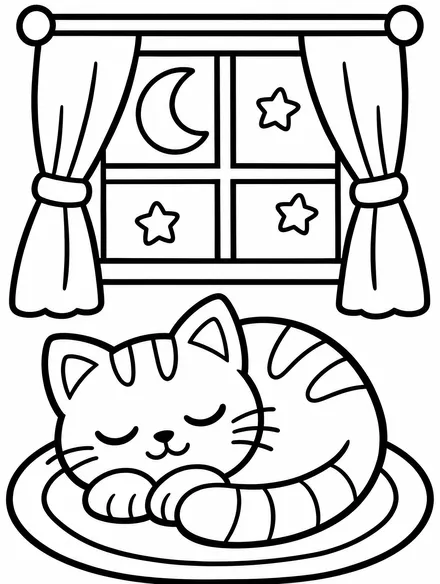
- Learning cat words: a baby cat is a kitten, and a short sleep is a cat nap
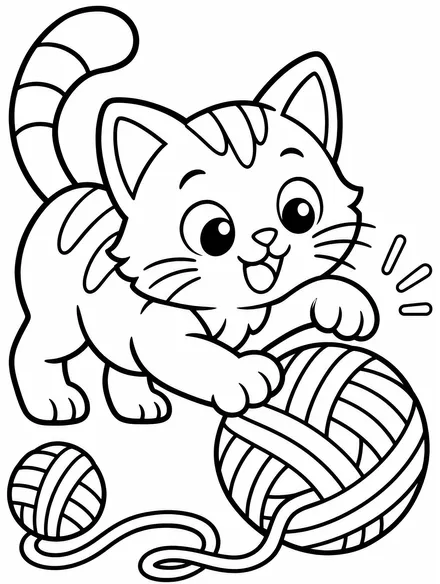
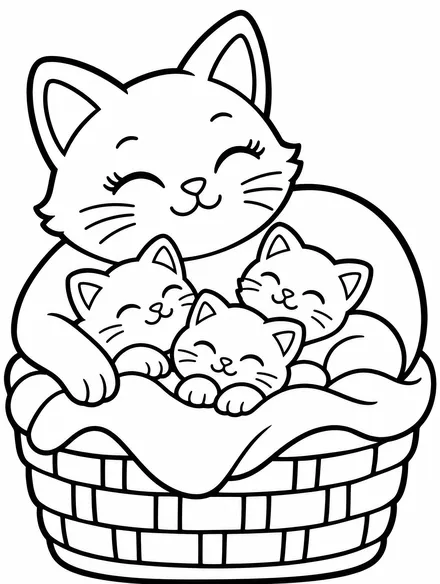
- Counting kittens, stars, yarn balls and whiskers
Ways to use these pages
- Count the whiskers on each cat, then draw whiskers on your child's cheeks with a washable marker and talk about what whiskers do.
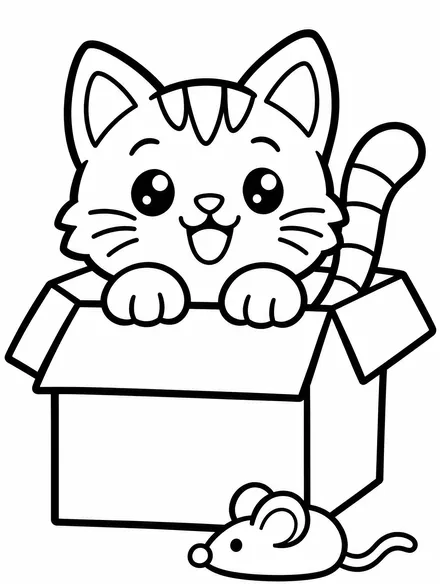
- Make a cat's day: put the pages in order (play with yarn, watch a bird, hide in a box, take a cat nap) and tell the story together.
- After coloring the cat in a box page, give your child a big cardboard box to turn into a cat bed for a stuffed cat.
- Move like a cat: stretch, tiptoe softly, pounce and curl up for a nap, then talk about which move was hardest.
Questions
What age are these cat coloring pages for?
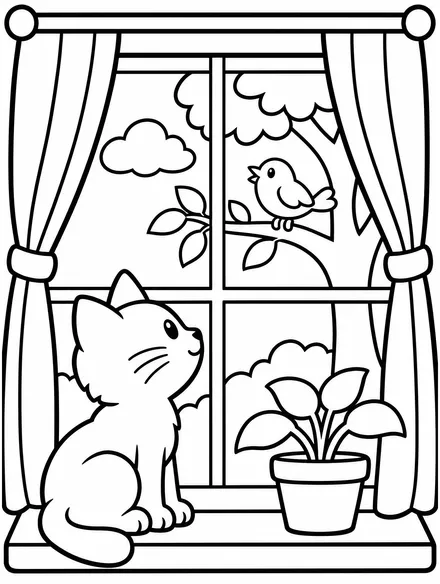
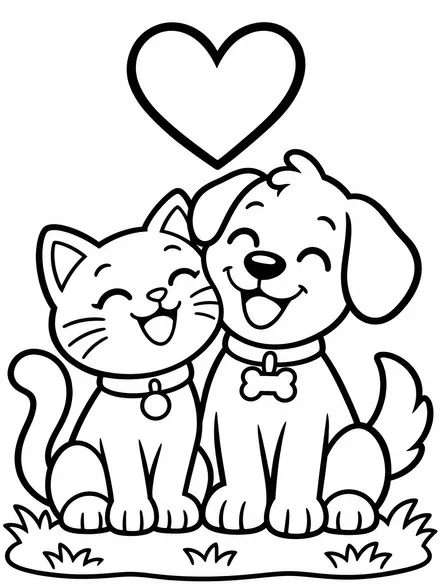
Most pages suit ages 3 to 8. The kitten on a cushion, the cat in a box and the cat and dog page have the biggest open shapes for toddlers and preschoolers. The cat in the window and the cat with yarn have more small parts, like curtains, leaves and yarn strands, for kids who like detail.
Which cat pictures are included?
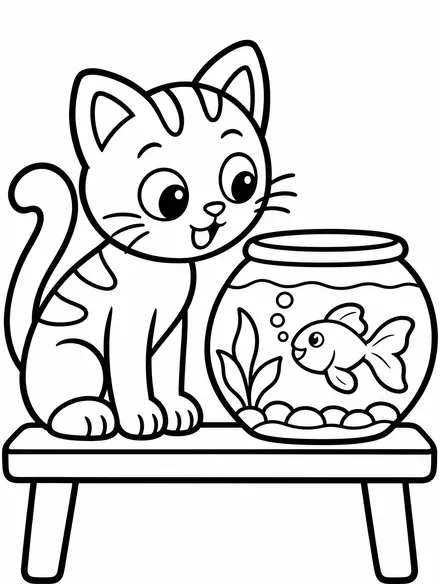
A kitten on a cushion, a cat playing with yarn, a mother cat with three kittens, a sleeping cat, a cat in a box, a cat watching a bird from the window, a cat and dog who are best friends and a cat looking at a goldfish. Each page has a simple fact about cats to share.
Do you have dog and puppy coloring pages too?
Yes. Our dog and puppy coloring pages have 8 more pages: a puppy with a bone, a dog playing fetch, a dog in its bed, a puppy bath, a dachshund, a child walking a dog, a dog house and puppies in a basket.
Is there a pets homeschool week to go with these?
Yes. Our free placement check builds week 1 of a preschool or kindergarten plan for your child, and if you pick pets as their theme, the counting and ten frame pages are drawn with puppies, kittens and other pets, and a short story stars your child. It takes about 5 minutes and needs no card. These coloring pages stay free either way.