What kids practice
- Learning the names of the planets, the moon, the sun and the stars
- Counting stars, planets, craters and wheels
- Talking about what is real (planets, rockets, astronauts) and what is pretend (aliens)
Ways to use these pages
- Make a night sky wall: color the pages, cut out the rocket, planets and moon, and tape them onto a big sheet of black or dark blue paper.
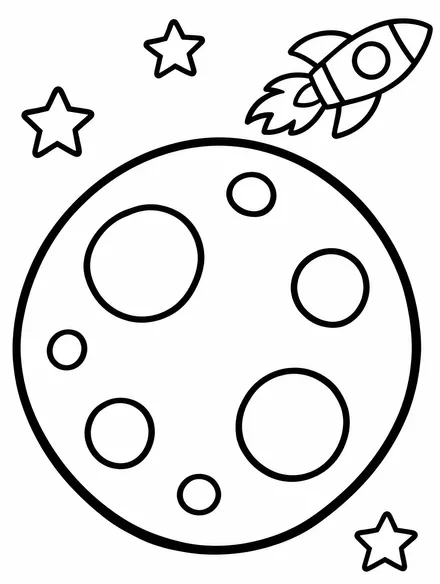
- Look at the moon together on a clear night, then color the moon page and talk about the shape you saw.
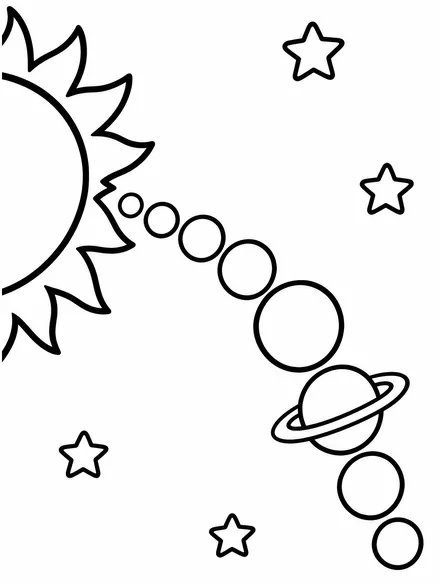
- Line up the solar system page with a ruler and say the planets in order, from Mercury out to Neptune.
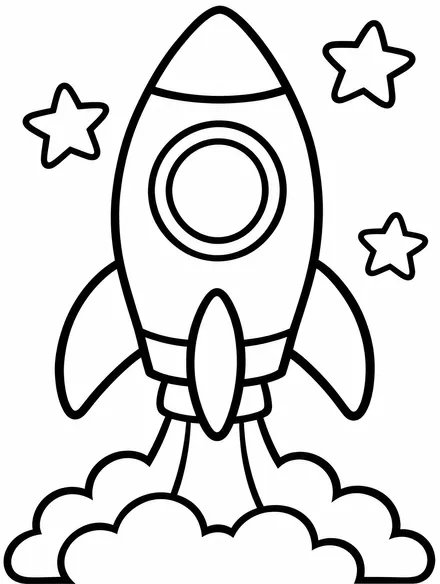
- Play countdown: color the rocket, then count down from 10 together and lift it off the table on blast off.
Questions
What age are these space coloring pages for?
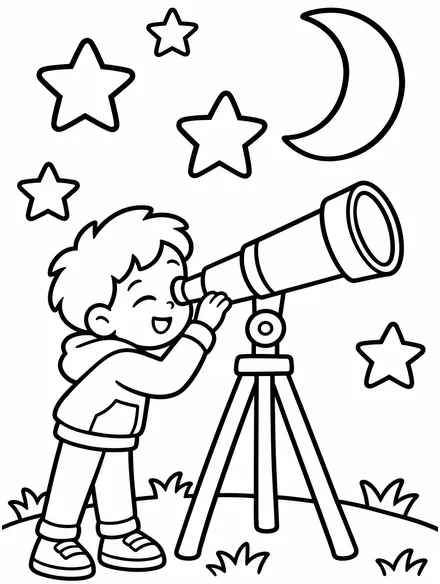
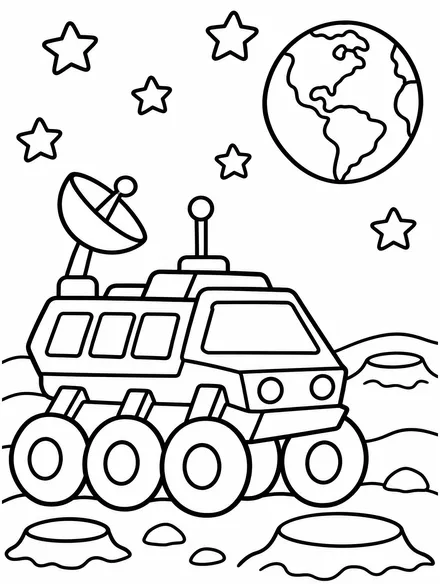
Most pages suit ages 3 to 8. The rocket, moon and planet pages have the biggest open shapes for preschoolers. The solar system, telescope and moon rover pages have more parts for kids who like detail. If a page feels too busy, color part of it together and let your child finish the sky.
What is included in these outer space coloring pages?
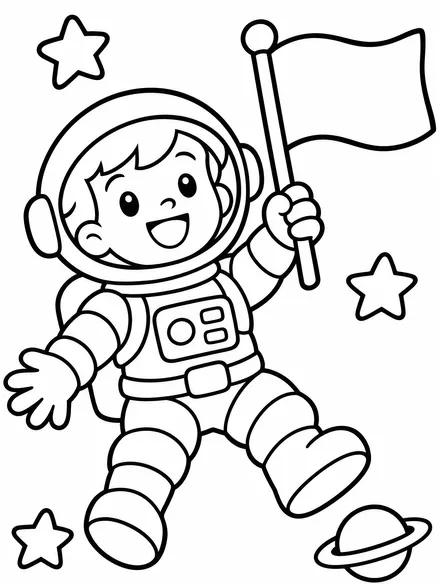
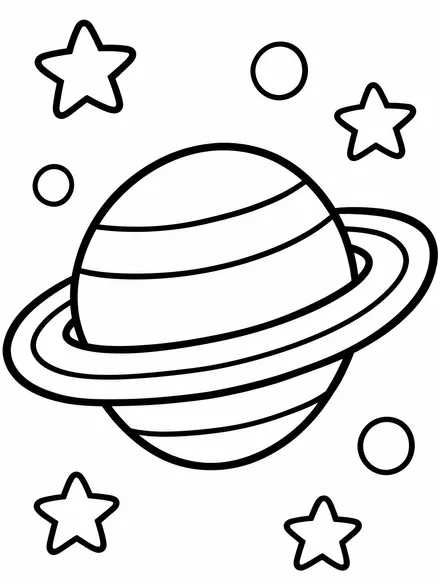
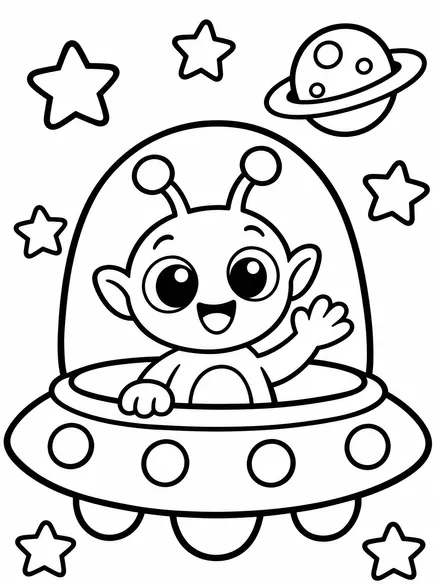
A rocket, an astronaut, the sun and eight planets, Saturn with its rings, the moon with craters, a friendly alien in a flying saucer, a child with a telescope and a moon rover. Each page has a few simple facts to share and a letter or counting idea.
Does the solar system page show all the planets?
Yes. It shows the sun and the eight planets in order, from Mercury closest to the sun out to Neptune. The planets are drawn as simple circles to color, not to size: in real life Jupiter is far bigger than the others.
Is there a space homeschool week to go with these?
Yes. Our free placement check builds week 1 of a preschool or kindergarten plan for your child, and if you pick space as their theme, the counting and ten frame pages are drawn with rockets and planets, and a short story stars your child. It takes about 5 minutes and needs no card. These coloring pages stay free either way.